Israel Hayom | BDS: A threat to the entire Middle East

Israel HaYom, Abed Almaala, September 6, 2016:

As a Jordanian politician, I feel obligated to speak out against the anti-Israel boycott, divestment and sanctions movement and its effect on ‎the Middle East and the world.‎

I represent the point of view and interests of the Jordanian people. ‎By doing so, I have freedom that many others may not. My views on ‎BDS are unbiased and balanced because I am not an Israeli and ‎nobody could accuse me of being anti-Arab.‎

Let me be clear: BDS is a reckless act of hatred that threatens the ‎security and stability of not only Israel, but also my country, Jordan, and the ‎entire Middle East.‎

BDS seeks to attack and isolate Israel. But what is Israel’s importance to Jordan, and to the world? Why should anyone care if Israel is hurt?

This is what the president of the Jordanian opposition, Mudar Zahran, wrote last year in Israel Hayom: ‎”If the day were to come when Israel falls, Jordan, Egypt and many others would fall, ‎too, and ‎Westerners would be begging Iran for oil. ‎

“We can hate Israel as much as we like, but we must realize that without it, we too ‎would be ‎gone.‎‏”‏

Israel is at the front of the war against terror in our region, ‎and if Israel is hurt, we all will suffer, and Jordan will suffer the most.‎

Therefore, BDS is a threat to us all — a threat to America as much as it is a threat to ‎Israel, Jordan and our Palestinian brothers.‎

BDS claims to target Israel because Israel oppresses the Palestinians. If so, why does BDS never target Jordan’s government, which oppresses and destroys the lives ‎of the majority of Jordanians of Palestinian origins, and where many of my own people, the Bedouin Jordanians, go hungry?‎

Why does BDS never boycott Lebanon, where Palestinians are banned from working ‎as taxi drivers? Why does it not boycott Syria, where President Bashar Assad has killed thousands of Palestinians ‎in Yarmouk camp?‎

BDS, admit it: You are racists and anti-Semites.‎

Your activities are a threat to Jordan, and it is my mission as Jordan’s shadow commerce secretary to enhance, expand, strengthen and promote trade ‎between my country and Israel.‎

But BDS is not alone. It could not survive without support, both ‎financial and political, and we in the Jordanian opposition ‎have information that BDS receives support of various kinds from Arab dictators.‎

From day one, Arab rulers have been telling us that Israeli is the enemy, and that we ‎should forget about our own hungry children and our ruthless governments and focus exclusively ‎on hating and killing Jews.‎

BDS promotes the very same bankrupt concepts.

I say, BDS: Shame on you.

Shame on you for attacking the only country that offers jobs to my Palestinian brothers.

Shame on you for attacking the country that provides free health care for Palestinian ‎cancer patients.

Shame on you for selling your souls to Arab regimes.‎

As a Muslim, I know that since my Prophet Muhammad was welcomed in Medina ‎by the Arabs and the Jews, he traded with and even signed ‎a mutual defense agreement with the Jews.

And as a Jordanian and a member of Jordan’s opposition, it is time we stopped ‎talking about peace and began living peace through economic prosperity; this is ‎our promise and our mission.‎

BDS is not only hateful and shameful, but also strengthens Arab dictators who hypocritically criticize Israel for alleged human rights violations when they, themselves, are the world’s top ‎human rights violators. ‎

A man is known by the company he keeps; if the biggest supporters of BDS are Arab and Muslim dictators, ‎what does this say about BDS?‎

We Arabs have boycotted Israel for 70 years. Where has it gotten us? We are ‎light-years behind Israel in technology and the economy. We will stop this in ‎Jordan and begin learning from our Israel friends.‎

This dream is not new. It was the dream of the late Prime Minister Yitzhak Rabin, who ‎saw economic prosperity as the road to peace. That is why I was honored to organize a memorial event for him in the U.S. Congress when he ‎was killed, more than 20 years ago.

Let us make his memory live through action. Let us turn the lost hopes into a ‎beautiful reality, and disappointment into happiness. And let us all put BDS ‎where it belongs, in the dust bin of history.‎

Someday soon, Jordan will be free and we will build ‎a new system that will work closely with Israel, through partnership, not ‎competition, and through true cooperation rather than just a cold peace.‎

And we will turn Jordan into a model for Arab countries to follow through ‎cooperation with our Israeli brothers and sisters and the blessings of our ‎American friends.‎

Am Yisrael Chai. Am Yarden Chai.

Source: Israel Hayom | BDS: A threat to the entire Middle East

New Zealand’s latest Middle East move not in keeping with our history | Stuff.co.nz

Karl Du Fresne, Feb 7, 2017:  Is there any more intractable issue in international affairs than that of Israel and Palestine? Offhand, I can’t think of any.

It’s tricky for a whole lot of reasons. One is that the competing claims of the two sides, Israel and the Palestinians, both have some weight.

The Jews, having suffered centuries in exile, mostly in countries where they experienced relentless discrimination and persecution, have a right to a homeland where they can feel safe and secure. But the Palestinians feel aggrieved because to provide that Jewish homeland, they were displaced from land that they regarded as theirs.

Another complicating factor is that both sides are capable of behaving badly – sometimes very badly.

Palestine shelters terrorist groups dedicated to the destruction of Israel, the Middle East’s only democracy, and one where Arabs enjoy rights of citizenship.These fanatics think nothing of killing innocent civilians. In their eyes, no Jew can be innocent. The very fact of being Jewish is a crime that warrants their extermination.

Groups such as Hamas are indifferent even to the suffering of their own people, cynically exploiting children and other civilians as human shields.When it suits them, the Palestinians make noises about negotiating a settlement. But whenever a deal looks within reach, they pull back or impose new conditions that they know will be intolerable to the Jews. It was said of the late Yasser Arafat, head of the Palestine Liberation Organisation, that he never missed an opportunity to miss an opportunity.

For their part, the Israelis don’t always make it easy to support the Jewish cause.

They have occasionally been guilty of gratuitously brutal reprisals. The 1982 Shatila and Sabra massacres, when Israeli forces turned a blind eye to the slaughter of civilians in Lebanese refugee camps thought to harbour terrorists, remains a terrible stain on the country’s reputation.

Aggressive territorial expansion by Jewish hardliners is another factor that troubles people who might otherwise support the Israeli cause. The widely held religious conviction that the Jews are “God’s chosen people” is no help either. It encourages Jewish zealots to believe they have divine endorsement in whatever they do.The Israeli prime minister, Benjamin Netanyahu, is not a likeable man. He gives the impression of being arrogant and belligerent.

But Netanyahu is strong, like his predecessor Ariel Sharon, and the Israelis have a history of supporting leaders who uncompromisingly defend their country’s right to exist. You can hardly blame them, when their tiny country – less than half the size of Canterbury – is surrounded by 22 hostile Arab states, many of which would cheerfully see Israel obliterated.

This is the backdrop against which New Zealand strangely co-sponsored a recent United Nations resolution condemning as illegal Israeli settlements in territory occupied by Israel since the 1967 Six-Day War – a war started, and quickly lost, by the Arabs.

I say “strangely” because the Israel-Palestine question is one on which New Zealand has previously taken a prudently cautious approach. This is in line with our international reputation as an honest broker that seeks honourable and sustainable solutions to problems rather than taking sides or adopting provocative stances.

Our support for the UN resolution was a dramatic departure from this approach. It came as a bombshell just two days before Christmas. You have to wonder what’s changed?

The picture is made more opaque by the involvement of our slippery foreign affairs minister Murray McCully, a man who could make a stroll to the corner dairy for a bottle of milk look suspicious.

McCully claimed New Zealand’s support for the resolution was all about promoting the so-called two-state solution, under which Israel and Palestine would peacefully co-exist. But the obvious suspicion is that we were doing a favour for the White House.

Barack Obama had a notoriously strained relationship with Netanyahu and may have wanted to score a diplomatic blow against him before his term expired. To have moved directly against Israel, however, would have risked a damaging domestic political backlash within the US.

Was New Zealand, then, leaned on to do Obama’s dirty work, with the US playing its part by refusing to exercise its usual veto against the resolution? In the absence of any convincing alternative explanation, it seems plausible.

Even if we accept McCully’s assurance that our intentions were honourable, why should New Zealand so suddenly take an active and provocative stance on such a volatile issue? After all, it’s not as if there’s any shortage of countries willing to pillory Israel.

The backing of a respected democracy like New Zealand gave the resolution a force that it would not otherwise have had. The Jew-haters will have taken great encouragement from our support and could well use it to justify further acts of terrorism.

Is this what New Zealanders want? I doubt it. It’s a nightmarishly complicated issue and we’re probably better off trying to work constructively from the sidelines. But if we’re forced to take sides, I know which one I’d opt for.

Source: New Zealand’s latest Middle East move not in keeping with our history | Stuff.co.nz

No simple solution for a deal in Middle East – World – NZ Herald News

The Trump Administration appears to be easing away from longstanding US support for Palestinian statehood as the preferred outcome of Middle East peace efforts, which may please some allies of Prime Minister Benjamin Netanyahu in Israel.

But the alternatives are few, and each comes with daunting and combustible complications, including for Israel itself.

The idea of two states in the Holy Land – a Jewish Israel and an Arab Palestine – rests on a particular logic: There are two quite different peoples of roughly equal size living between the Mediterranean Sea and the Jordan River; each wants their own nation-state to control and dominate numerically; each has shown tenacity toward this goal.

Source: No simple solution for a deal in Middle East – World – NZ Herald News

NZ’s Israel resolution: Peacemakers seldom win friends

A UN Security Council resolution, calling for a ban on illegal Israeli settlements in the occupied territories, has passed, with NZ taking a major role. Phil Smith outlines the background and the blowback.New Zealand has dared to go where even Egypt’s strongman, President el-Sisi, feared to tread.

Abdel Fattah el-Sisi put a forward a resolution demanding an end to Israeli settlement building, but after an incredibly inappropriate call from Donald Trump, el-Sisi withdrew it again. Exactly how Trump achieved that is anyone’s guess, but America’s $1.5 billion aid package to Egypt may have been threatened.

Source: NZ’s Israel resolution: Peacemakers seldom win friends

The opinions expressed in this article are those of the author and do not represent the views of NZFOI.

Yom Kippur – How It Changes Us – Rabbi Sacks

Below is an extract from the Koren  Sacks Yom Kippur mahzor. To those who fully open themselves to it, Yom Kippur is a life-transforming experience. It tells us that God, who created the universe in love and forgiveness, reaches out to us in love and forgiveness, asking us to love and forgive others. God never …

Source: Yom Kippur – How It Changes Us – Rabbi Sacks

The Mutating Virus: Understanding Antisemitism – Rabbi Sacks

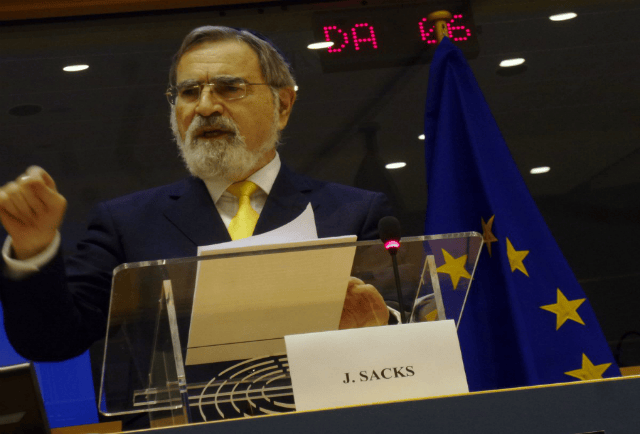
Below is a transcript of a speech by Rabbi Lord Jonathan Sacks at “The Future of the Jewish Communities in Europe” Conference at The European Parliament on 27th September 2016 in Brussels. The hate that begins with Jews never ends with Jews. That is what I want us to understand today. It wasn’t Jews alone who suffered under …

Source: The Mutating Virus: Understanding Antisemitism – Rabbi Sacks

Waatea 5th Estate Interview: 2016 Gaza Flotilla

Waatea

NZ Friends of Israel Association Inc was invited to take part in an interview with Marama Davidson; an unnamed veteran of a previous flotilla; an unnamed migrant Palestinian; and hosted by Martyn Bradbury.

Unfortunately we were yesterday advised that it would be recorded at 7pm tonight, and so with such short notice, we weren’t able to take part.

However, in order to contribute to the event and provide a balancing voice, NZFOI sent this statement to Waatea 5th Estate:

Waatea 5th Estate
UMA Broadcasting Ltd
Box 43 157
Mangere
Auckland 2153

Emailed:  Martyn Bradbury <bomberbradbury@gmail.com>

Dear Martyn,

Re: Waatea 5th Estate Panel Discussion on Women’s Flotilla to Gaza

Thank you for inviting us on the panel to discuss the upcoming Women’s flotilla to Gaza; and as you say, in particular “what this Flotilla will hope to achieve and the wisdom of it.” Unfortunately, the last-minute nature of the invite means a NZ Friends of Israel representative cannot attend in person. However, we would like to address some of the issues in this statement.

Firstly, we must acknowledge that there is a need for aid in Gaza and, unfortunately, there are many places around the world where people are struggling to provide food, shelter, and medical support for themselves and their families.

This is made all the more difficult when terror organisations divert aid from those who need it to support militant activities. In Gaza, Hamas has misappropriated cement intended for reconstruction, to build terror tunnels and has taken aid money to fund rockets and ‘martyrs’. This is why there is a need to screen the goods that enter Gaza.

It is important to note that there was no blockade in 2005, when Israel unilaterally withdrew from Gaza. After Hamas won the election in 2006, Israel and “The Quartet on the Middle East” (US, Russia, UN, EU) imposed economic sanctions and restrictions on Gaza. The naval blockade and land crossing policies were instituted as a response to rocket attacks and expressly for the purpose of stemming the flow of weapons into Gaza. The measures were deemed legal in the 2010 UN report following a flotilla attempt. In order to lift the blockade, Hamas must renounce violence against Israel, recognize Israel, and honor all previous agreements between Israel and the Palestinian Authority. To try and lift the blockade without a change from Hamas would put not only Palestinian but also Israeli citizens’ lives at risk.

The blockade also does not prevent Israel facilitating the movement of thousands of trucks of goods into Gaza or fifteen thousand people crossing the border each day, with capacity for much more should Hamas allow it. Neither does the blockade stop a number of organisations working in Gaza to ensure that the most needy people are looked after. For example, Save A Child’s Heart takes children from Gaza to Israel for life-saving cardiac operations.

One of the stated goals of the flotilla is to breach the Israeli maritime blockade of Gaza. This is in defiance of the Sir Geoffrey Palmer led report to the UN which said that “People may, of course, freely express their views by peaceful protest. But to deliberately seek to breach a blockade in a convoy with a large number of passengers is in the view of the Panel a dangerous and reckless act”. In order to maintain the legal blockade, Israel must stop any boat attempting to breach it. That is why the previous attempts have ended with the Israeli navy interceptions and arrests.

Kia Ora Gaza admitted that the last flotilla, which had a Maori TV crew on board, was a publicity stunt. This flotilla is no different and it is disappointing to see that the Green Party is involved. Given the needs of many different groups, it seems to us rather a waste to spend $25,000 – what Kia Ora Gaza hope to raise – on a publicity stunt when that money could buy essential food or medical supplies.

Twenty-five thousand dollars could also go a long way for the Women’s Affairs Center in Gaza, or the Women’s Unit of the Palestinian Center for Human Rights, which both appear to do good work in promoting women’s rights, gender equality and providing domestic violence counselling. Instead, the money is being used to try and garner publicity to demonise Israel.

There are multiple “indigenous” people groups that have legitimate historical and cultural claims in the region.  It is concerning to us that the Green Party would associate with a group like Kia Ora Gaza, which has openly justified violence against Israelis and supports an extremist one-state solution to the Arab Palestinian-Israeli conflict rather than the almost universally-supported, and UN-backed, two-state solution. Kia Ora Gaza has also promoted anti-Semitic libels on their Facebook page and Roger Fowler has compared Israel to Islamic State.  The Green Party is not helping to build peace by endorsing such messages.

Furthermore, the press releases from the organisers and from the Green Party have selectively focussed only on demonising Israel. There has been no discussion of Egypt’s blockade, which, unlike Israel, does not allow any aid trucks or people to cross the border. There has also been no discussion of the treatment of the people in Gaza by their government. Hamas is an Islamist organisation that took power with a bloody coup in 2006 and has a charter that seeks the destruction of Israel.

The Green Party and Kia Ora Gaza do not mention the human rights abuses committed by Hamas against both Israelis and its own people, including its murderous persecution of gays and political opponents, its willingness to sacrifice its own civilians as human shields (while Hamas leaders take shelter in the safety of bomb shelters or the luxury of five star hotels in Qatar), its exploitation of child labour in building the terror tunnels, its recruitment of women to be ‘martyrs’, and its failure to deliver its people any progress or solutions beyond violently attacking Israel. A policy that has only brought ruin and death.

Under the rule of Hamas, women in Gaza are not allowed to walk in public without a male chaperone and domestic violence in Gaza has affected 63% of women with almost half believing they deserved the beatings. The motivations and intentions of the flotilla must be called into question when such facts are missing from the discussion that Ms Davidson wants to have and foster.

We believe that the primary causes of the deprivation, hardship, and loss of life suffered by the people of Gaza are the policies of their government, Hamas. No one wants to see the people of Gaza senselessly suffer. Anyone who wishes to relieve their suffering should focus on urging Hamas to put aside violence and begin negotiations with Israel for establishing a peaceful State in which their people can not only live, but thrive.

Rather than promote peace, sadly the Flotilla will put lives at risk and most likely enflame and polarise the situation rather than bring the opposing parties together so that peace negotiations can be nurtured.

We hope you will read this statement on your show to give some balance to the programme. If there is an opportunity for other appearances, please do give us as much warning as you can.

Ideally we need to know at least a couple of weeks in advance of the date on which you would like to record an interview, who the participants will be and your discussion guide (which usually comprises a set of questions that have been prepared by your interviewer to use during the interview).

In this case, letting us know yesterday that the interview will be recorded today, is just not enough time for us to give it the regard that this important topic deserves.

Regards,

Tony Kan
President
NZ Friends of Israel Association Inc.  

You can watch the panel discussion here, at 7pm August .

Rachel Smalley: Is Israel above criticism?

naz_shah_620x310

Naz Shah, a Labour MP for Bradford in the UK, has been suspended from the party, accused of anti-Semitism over a post she shared on Facebook two years ago.

It showed a map of Israel super-imposed on a map of the United States. The headline said “The solution for the Israel-Palestine conflict – relocate Israel into the United States. Problem solved.”

As tends to happen, that comment was spotted by someone and brought to the media’s attention in Britain, and she’s been stood down because the party believes it is offensive and unacceptable.

Shah has apologised. She said she never meant to cause offence, and it was foolish to share that post.

It was really foolish – she’s an MP. The Middle East peace process is not something you can make fun of when you’re a politician.

However, I would question whether her “crime” in this case is so severe that she should be stood down.

Read more

Anti-Zionism Is The New Anti-Semitism, Says Britain’s Ex-Chief Rabbi

17/02/2015_Cemetary

Desecrated tombstones of the Sarre-Union Jewish cemetery in France February 17, 2015. “Across Europe, Jews are leaving.” Reuters/Vincent Kessler

On March 27, speaking to the Sunday Times, former Archbishop of Canterbury Rowan Williams expressed his concern at rising levels of anti-Semitism on British university campuses. There are, he said, “worrying echoes” of Germany in the 1930s. Two days later, in The Times, Chris Bryant, the Shadow Leader of the House of Commons and a senior member of the British Labour party, warned that the political left was increasingly questioning the right of the state of Israel to exist, a view he called a “not too subtle form of anti-Semitism.”

Across Europe, Jews are leaving. A survey in 2013 by the European Union Agency for Fundamental Rights showed that almost a third of Europe’s Jews have considered emigrating because of anti-Semitism, with numbers as high as 46 percent in France and 48 percent in Hungary.

Read more: Newsweek, 3 April 2016

The New York Times Renames Holy Sites to Make Jews Seem Like Occupiers

The Cave of the Patriarchs. Photo: Wikimedia Commons.

The New York Times is re-labeling the Cave of the Patriarchs in Hebron, in order to make Jews seem like occupiers of Muslim holy sites.  The Cave of the Patriarchs is mentioned in the first chapter of the Hebrew Testament, Genesis 23:9. Genesis was written about 3,400 years ago, but the oral recording of the Bible preceded that. Islam is 1,400 years old. Therefore, the “Cave of the Patriarchs” was the name in use for at least 2,000 years before Muslims could possibly have formulated an alternative name.Israel controls Hebron now, and has a strong claim to the area. So whether your criterion for authoritative naming is who originated it or who controls the area now, the Jewish people possess that authority.As with the Temple Mount, the Times went from: (1) Using the official name; to (2) giving equal billing to the two religions’ names — the Israeli name followed by the Muslim name; to (3) calling it the Muslim name followed by the Israeli name; and (4) calling the Cave the Ibrahimi Mosque, without referring to its Jewish name.

Source: The New York Times Renames Holy Sites to Make Jews Seem Like Occupiers | Jewish & Israel News Algemeiner.com