Juliet Moses articulates facts about Zionism and Israel, based on an article that was originally published by Shalom.Kiwi
Source: A Jewish New Zealander’s view on Israel – Israel Institute of NZ
NZ Friends of Israel Association Inc
Fighting racial intolerance in New Zealand and beyond
Juliet Moses articulates facts about Zionism and Israel, based on an article that was originally published by Shalom.Kiwi
Source: A Jewish New Zealander’s view on Israel – Israel Institute of NZ
Poll shows strong kiwi support for Jewish State
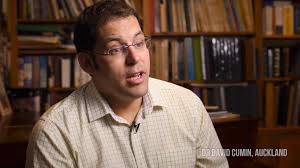
A new poll on the attitudes of New Zealanders to Israel, commissioned by the Israel Institute of New Zealand and conducted by Curia Research, shows four times as many kiwis support Israel as are opposed to the Jewish State. Fifty-five percent of almost 1,000 kiwis surveyed expressed their support for Israel, compared to only 13% against.
Co-director of the Israel Institute, Dr David Cumin, says these results defy the media and political portrayal of Israel.
“The support for Israel is most encouraging at a time when Israel is demonised in the media and blamed, by some, for putting obstacles in the way of peace”.
“It’s also important to know that there is support when Jews are once again under threat around the world and need to know that they have a safe haven in their ancestral homeland”
Read more: Dr David Cumin On IINZ Poll – Israel Institute of NZ
The decision by a local council in Sydney, backed by the Land and Environment Court, to block the construction of a synagogue in Bondi because it might become a terrorist target is repugnant and at odds with Australian values.
There’s something perverse about trying to reduce the risk of Islamist terror by making a decision that accommodates the most violent, intolerant members of the community.
Read more: Rita Panahi on Bondi synagogue: Ban is a reward for terrorists | Herald Sun

New Zealand artist, Rebecca Holden, has been invited to show her solo exhibition, ‘Sand in the Apricot Jam’, at the Museum of Rishon LeZion in Israel. The exhibition features large-scale painted works representing the New Zealand Mounted Rifles of World War One. But she’s going to need a bit of help to get there in November.
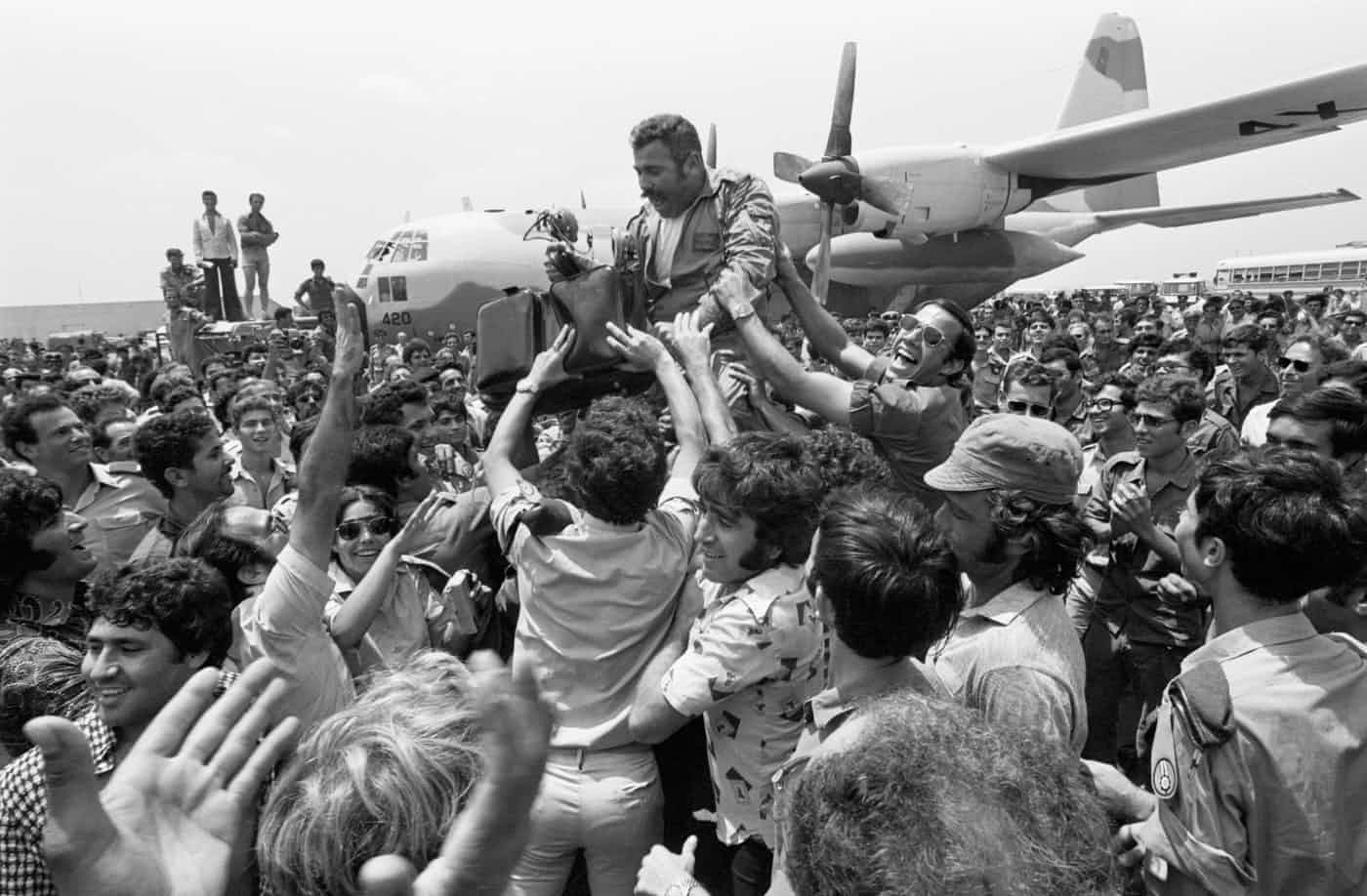
With Rami Sherman’s arrival in a couple of weeks, here is an informative retrospective on Operation Entebbe published in the Guardian in June 2016.
On 4 July 1976, the day the US celebrated its 200th birthday, an Israeli expat took a phone call that would change his life. A student in Cambridge, Massachusetts, he went by the name Ben Nitay, an Americanised shortening of the original, the better to fit into the land where he hoped to forge a business career and build a life. On the phone was his younger brother, calling with grave news. It concerned their older brother Yonatan, or Yoni. As children, they had idolised him; he was the one who led their games, who, they felt, had raised them. Then 30 years old, ruggedly handsome and newly installed as the head of Israel’s elite Sayeret Matkal commando unit, Yoni had, in the early hours of that day, led a raid to rescue more than 100 Israeli hostages held at Entebbe, Uganda. Word had just come that the operation had been an astonishing success and the hostages were free. But the leader on the ground – Yoni – had been killed in action. Their brother was dead.
And so, while the people around him watched marching bands and held street parties to mark America’s bicentennial, and while the world marvelled at the sheer audacity of a military raid that defied all odds, Ben Nitay – born Binyamin Netanyahu – made the seven-hour drive to Cornell University in Ithaca, New York, where his father was teaching. The 26-year-old was determined to break the news to his parents himself.
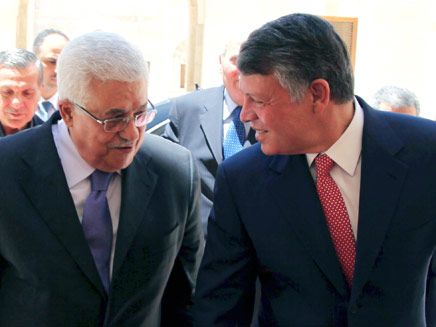
Palestinian Authority Leader, Mahmoud Abbas (left) and Jordanian King Abdullah II (right)
Jordanian King Abdullah II called Palestinian Authority leader Mahmoud Abbas this evening telling him “to respect the historical and legal reality” of the holy site in Jerusalem. He added that continued efforts will be made in order to try and solve the crisis in the holy city and bring the situation back to normal.
Abdullah’s call comes as the Palestinian public continues to resist going to the Temple Mount even after the Israeli Security Cabinet’s decision to remove the metal detectors from the holy compound’s entrance. The Israeli security establishment along with the Palestinian public are preparing for especially tense Friday prayers.

JERUSALEM (Reuters) – For 10 days, Jerusalem has been in the grip of the worst bloodshed for years over Israel’s decision to install metal detectors at the entrance to the Old City’s holy compound.
Some readers and observers have wondered how a simple matter of metal detectors – so common in so much of the world – could provoke such violence: a Palestinian man stabbed to death three members of an Israeli family in their home and three Palestinians have been shot dead by Israeli forces in clashes.
But as with anything connected to politics and religion in the Holy Land, the dispute is about much more than the security devices themselves, touching on issues of sovereignty, religious freedom, occupation and Palestinian nationalism.
Read more: What’s the issue with metal detectors in Jerusalem?

Two Israeli police officers were killed Friday when gunmen with improvised weapons opened fire near the holiest site in Jerusalem, then fled back to the Temple Mount plaza outside the Al Aqsa Mosque and engaged in a rare shootout with police.
Israeli police spokesman Micky Rosenfeld called the incident a “terrorist” attack and said all three attackers were killed. At least one had a knife and tried to stab Israelis, he said.

Israeli Prime Minister Benjamin Netanyahu called Sunday for the United Nations to shut down its Palestinian refugee aid agency, saying it was responsible for incitement against the Jewish state.
Mr Netanyahu said he raised the issue during the visit in recent days of Washington’s UN envoy Nikki Haley, who has accused the United Nations of bias against Israel.”I told her that the time had come for the United Nations to reconsider the continued existence of UNRWA,” his office quoted him as saying, referring to the UN Relief and Welfare Agency.
He said that while millions of other refugees around the world were cared for by the office of the UN High Commissioner for Refugees (UNHCR), only the Palestinians have their own body.”
In UNRWA’s institutions, there is a great deal of incitement against Israel,” Netanyahu said during the weekly cabinet meeting.He also said the agency’s very existence “perpetuates and does not solve the Palestinian refugee problem”.
“Therefore it is time to dismantle UNRWA and merge its parts into the UNHCR,” he added.
UNRWA spokesman Chris Gunness said the agency’s future could not be decided unilaterally.
“UNRWA receives its mandate from the UN General Assembly and only the UN General Assembly, by a majority vote, can change our mandate,” he told AFP, adding that in December the assembly extended the mandate for a further three years.
UNRWA runs hundreds of schools for Palestinian refugees in the Gaza Strip, the occupied West Bank, Israeli-annexed east Jerusalem, Lebanon, Jordan and Syria.
It also distributes aid and provides teacher training centres, health clinics and social services.
Israel views the agency as biased against it and its Palestinian staff as frequently hostile.
In February, the Jewish state complained the head of the UNRWA staff union in Gaza was politically active in the militant Islamist group Hamas, which rules the coastal strip.
On 1 June, UNRWA discovered a section of a Hamas tunnel running under two of its schools in the strip’s Maghazi refugee camp, the agency has said.
Hamas has denied building the Maghazi tunnel, whose discovery drew condemnation from both UNRWA and Israel.
On Friday, Israel sent a letter of protest to the UN Security Council over the matter.
Over the years, Hamas has built a labyrinth of tunnels, some passing under the border into Israel in order to launch attacks.
Source: Israeli PM calls for UN to dismantle Palestinian aid agency

US UN Ambassador Nikki Haley visits Gaza tunnels
On 1 June UNRWA discovered part of a tunnel that passes under two adjacent Agency schools in Maghazi camp in the Gaza Strip, namely the Maghazi Elementary Boys A&B School and the Maghazi Preparatory Boys School. The schools are located on the same premises. The discovery was made during the summer vacation, at a time when the schools are empty, and in the course of work related to the construction of an extension of one of the buildings.
Following a thorough inspection of the site, UNRWA can confirm that the tunnel has no entry or exit points on the premises nor is it connected to the schools or other buildings in any way.
UNRWA condemns the existence of such tunnels in the strongest possible terms. It is unacceptable that students and staff are placed at risk in such a way. The construction and presence of tunnels under UN premises are incompatible with the respect of privileges and immunities owed to the United Nations under applicable international law, which provides that UN premises shall be inviolable. The sanctity and neutrality of UN premises must be preserved at all times.
UNRWA has robustly intervened and protested to Hamas in Gaza. It has also informed them that the Agency intends to seal the tunnel under its premises, as an immediate priority. We will not allow any students or staff into the building until the issue is resolved.
Read more: UNRWA Condemns Neutrality Violation in Gaza in the Strongest Possible Terms | UNRWA


