As floodwaters recede, Israeli disaster aid is in Houston for the long haul | The Times of Israel

Niv Rabino arrived home to Haifa earlier this week after completing a stint as head of IsraAID‘s mission on the Greek island of Lesvos.

For nine months, Rabino oversaw the humanitarian aid organization’s intensive work supporting the medical and psychosocial needs of Middle Eastern and African refugees stuck in camps waiting for permission to migrate to the European mainland. He was looking forward to some time off.

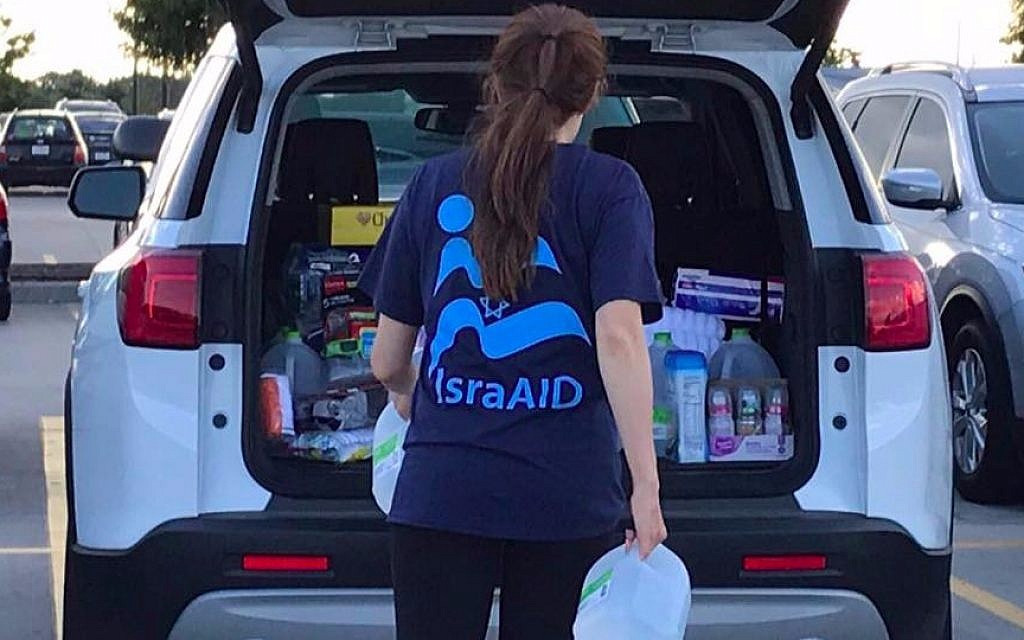
Then Hurricane Harvey struck Texas, and Rabino knew his vacation was going to have to be postponed. IsraAID immediately put together a response team, and he offered to join.

It was obvious that the people of Texas needed help, but there was also a personal reason why Rabino wanted to jump on a plane to the US: His brother’s 11-year-old daughter was caught up in the flooding.

Read more: As floodwaters recede, Israeli disaster aid is in Houston for the long haul | The Times of Israel

Peter Gaspar Holocaust Survivor Talk video now available


On September 3, Peter Gaspar a survivor of the Terezin Concentration Camp gave his moving story at the Villa Maria College Auditorium, to a full house.

Many expressed their disappointment that they were unavailable to attend the talk.  Fortunately we recorded this moving event and here is the video.

In 1942, 40 of his family were rounded up and sent to Auschwitz, never to return.  Peter survived the war by going into hiding. Along with his parents, Peter was hidden for three years and then during the last six months,

Peter and his mother were interned in the Terezin Concentration Camp. His father was enslaved at the Sachsenhausen concentration camp and was forced to endure the 248 km Death March to Lubeck in the Winter of 1944/1945.

This was the camp where the Germans printed counterfeit British currency and conducted medical experiments. The family found refuge in Australia in 1949.

His parents were never the same again.  His mother never stopped grieving for her lost family and felt deep guilt for surviving.

Peter currently volunteers with the Courage to Care program in Melbourne inspiring young people to be more accepting and tolerant. This year he will also be travelling to schools throughout New Zealand, through the HOPE Project.

Many thanks to Mikaela Hood for her volunteering Villa Maria College as a venue and to David Allan for recording the video.


Operation Entebbe 40 years on: A personal recollection

Rami Sherman (fourth from the left) with members of the Hardie family

In August, Major Rami Sherman (Retired) gave his fascinating story to a full house at the Air Force Museum in Christchurch.

He was an operations officer for the special forces unit that audaciously and successfully freed 102 hostages from Entebbe International Airport in 1976.

The story of this amazing mission has now become the stuff of legend in the history of Israel.

A combination of Palestinian terrorists and German anarchists hijacked an Air France flight that was originally scheduled to go from Athens to Paris.  They forced the plane to travel to Libya instead, where they refuelled.

They then made their way to Entebbe International airport in Uganda.  There, they were joined by additional terrorists, implying collusion with the Ugandan regime.

According to Sherman, the Israeli government initially felt that the French government was responsible for negotiating with the terrorists because the aircraft is legally considered French sovereign territory.

This changed, once the terrorists made their demands clear.  They required the release of 53  Palestinian and pro-Palestinian militants.  40 of them were prisoners within Israel.

At first, the Israeli military commanders were set against any kind of military action because there was a lack of concrete intelligence and the great distances involved created many logistical challenges.

Shimon Peres, the Minister of Defence insisted that Israel had a moral obligation to attempt a rescue, no matter what the risk.

The Prime Minister of Israel at the time, Yitzhak Rabin, said that if the military commanders were to put together a plan, he promised to seriously consider it.

The final green light for the operation was not given until the Hercules aircraft were well on their way to Uganda.

The aviation aspects were particularly challenging.  They had to organize somewhere nearby to refuel as they couldn’t travel from Israel and Uganda return on one tank.  They couldn’t guarantee the runway would be lit, so they would have to land in darkness.  MI6 convinced the Kenyans to open Nairobi airport for them.

Peres drafted his resignation, in case the mission was a failure.

Rami Sherman with a newspaper banner published at the time

After the mission was over, Idi Amin, the Ugandan dictator, arranged for the MI6 operative to be assassinated in retribution for the humiliation he felt.

Because of the crisis, they had to carry out the mission without regard to weather conditions.  Idi Amin was well known for being vindictive and wouldn’t hesitate to use deadly force to retaliate, so they had to set demolition charges on all the MIG fighters at the airport, so they couldn’t be used to give chase and shoot down the four C-130s they used.

They flew 30 feet above the ground most of the way to avoid radar, as many of the nearby countries were hostile to Israel and they did not want to risk the chance that the terrorists might receive advance warning of their arrival.  It was an eight hour flight so it certainly tested the stamina of the pilots.   Amazingly the runway lights were on when they arrived; the weather opened up near Uganda and the skies were clear.

When the terrorists decided to release the non-Jewish hostages, they separated the non-Jewish hostages from the Jewish hostages.  For the Jewish hostages, this evoked traumatic memories of the “selection” process adopted by the Germans during the Holocaust as they chose who would live and who would die.  The loud wailing from among some of the Jews distressed all the other hostages.  One of the hostages lost her mind.

A New Zealander and his wife, Colin and Nola Hardie were amongst the hostages.  Colin was the General Manager of the Christchurch Star.  He wrote down detailed descriptions of the terrorists, drew a layout of the terminal building, noted their routine for rotating the guards, as well as describing the experiences of the hostages on his shirtsleeves and arms.

He had to conceal what he was doing as there would be a very real risk that he would be shot if discovered.

When he was debriefed at Orly Airport, the officials said his information was like gold and would save many lives.

Rami often wondered how the intelligence he was given about what was going on inside the terminal building was so detailed.  Now he knew.

When Rami heard of this, he requested that we contact the family so that he could meet them.  Surprisingly, we tracked his family down and they were able to join us at the airport Museum and gave their story too.

During the crisis, the Hardie family were glued to the radio, as this was their only source of timely information.  At one stage, one of the bulletins said that the terrorists had changed their minds and were now going to execute the hostages.

One of their daughters was heavily pregnant at the time, and the intense anxiety caused her to go into premature labour.  Fortunately, they were able to arrest the labour at the hospital and the pregnancy went full term, with no harm to the baby.

Following their return, Colin gave many public talks about his experience.  Eventually he stopped giving them because he found reliving the experience over and over again too difficult.  He passed away at the age of 90 in 2012.

Nola came back a changed woman.  One of her daughters said that she became much more understanding and patient of others facing difficulty.

It was tremendously heartwarming to see Rami hug the family, as he showed his appreciation for the courage and bravery of Colin and Nola.  Who knows how many more would have died but for the intelligence that Colin was able to gather.

ABOUT THE AUTHOR

Tony Kan is the President of NZ Friends of Israel and a Business Consultant based in Christchurch.

IINZ 2017 Voters’ Guide – Israel Institute of NZ

Welcome to the Israel Institute of New Zealand 2017 Voters’ Guide. The Institute wrote to all MPs asking for their and their party positions on Israel.

We have highlighted party positions (for those polling above 1%), party leaders’ positions, statements made by members of the NZ-Israel Parliamentary Friendship group, and other MPs.

Read more: IINZ 2017 Voters’ Guide – Israel Institute of NZ

Rami Sherman Entebbe talk video is now available

There were many who expressed their disappointment that they were unable to attend Major Rami Sherman’s fascinating talk.

We’re pleased to be able to bring you this recording, with much appreciation to David Allan.

Why the Charlottesville Marchers Were Obsessed With Jews – The Atlantic

Anti-Semitic logic fueled the violence over the weekend, no matter what the president says.

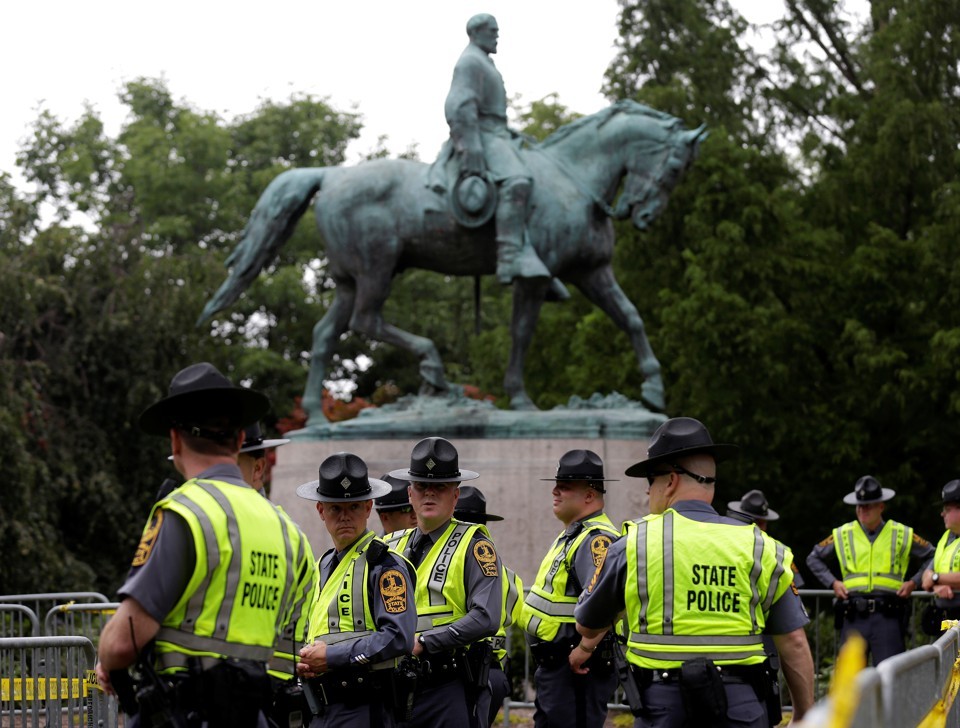
The “Unite the Right” rally in Charlottesville was ostensibly about protecting a statue of Robert E. Lee. It was about asserting the legitimacy of “white culture” and white supremacy, and defending the legacy of the Confederacy.

So why did the demonstrators chant anti-Semitic lines like “Jews will not replace us”?

Read more: Anti-Semitism at the Deadly Charlottesville Protests – The Atlantic

TVNZ Sunday airs item on SS Soldier: “I knew nothing.”

Poll Shows Strong Support for Israel Among New Zealanders, Despite Their Government’s Policies

A new poll of close to 1,000 New Zealanders has found surprisingly strong support for Israel.

According to local news outlet J-Wire, the Israel Institute of New Zealand found that respondents supported the Jewish state by a margin on 55 to 13 percent.

The institute’s co-director David Cumin commented, “The support for Israel is most encouraging at a time when Israel is demonized in the media and blamed, by some, for putting obstacles in the way of peace.”

“It’s also important to know that there is support when Jews are once again under threat around the world and need to know that they have a safe haven in their ancestral homeland,” he added.

The poll showed other positive results for Israel. It found that on the question of whether Israel should be a Jewish-majority state, 60 percent of men and 51 percent of women said yes. Fifty-eight percent of those under age 30 and over age 60 responded affirmatively.

These numbers are particularly striking because of recent tensions between the governments of New Zealand and Israel.

Read more: https://www.algemeiner.com/2017/08/09/poll-shows-strong-support-for-israel-among-new-zealanders-despite-their-governments-policies/

Students learn about the horrific history of the Holocaust | Stuff.co.nz

The classroom at Longburn Adventist College near Palmerston North was still and silent as students learned about the Holocaust.

Year 10 student Apia Yawha said he had heard about how Jewish people were shot, put in concentration camps and gas chambers.

But he knew little about the history of the Holocaust, until a seminar on Monday.

Read more: Students learn about the horrific history of the Holocaust | Stuff.co.nz

Australian Nazi Group Plasters Melbourne Schools With Violently Racist and Antisemitic Posters | Jewish & Israel News Algemeiner.com

A fanatical neo-Nazi Australian group that advertises itself as “the Hitlers you’ve been waiting for” has embarked on a campaign to plaster schools in the city of Melbourne with violently racist and antisemitic images and slogans.

The posters were discovered over the weekend at three Melbourne schools. “Luckily the teachers got there first to cover them up,” a cleaner at one of the schools told local broadcaster 3AW.

Read more: Australian Nazi Group Plasters Melbourne Schools With Violently Racist and Antisemitic Posters | Jewish & Israel News Algemeiner.com