Israel’s vaccine rollout has been fast, so why is it controversial and what can other countries learn? | The Conversation

Israel is rolling out a fast-tracked COVID-19 vaccine programme, giving a first dose to 48% of its population of 9 million in five weeks. The country’s aim is to vaccinate 80% of the population by the end of May 2021.

But questions have also been raised about the way the programme has been carried out. So what can be learned from Israel’s experience?

Read more

ICC declares jurisdiction over [alleged] crimes in Palestine | The Jurist

The International Criminal Court (ICC) ruled Friday that it has jurisdiction over crimes committed in Palestine. The ICC was established in 2002 and prosecutes genocide, crimes against humanity, and war crimes committed around the world. In 2018, Palestine referred possible crimes to the ICC Prosecutor for investigation. In 2020, the Prosecutor sought a ruling of jurisdiction from the Pre-Trial Chamber.

According to Article 12 of the Rome Statute, which governs the ICC, the court may exercise jurisdiction over a crime if “the State on the territory of which the conduct in question occurred” is a party to the Statute or otherwise accepts the jurisdiction of the court. Israel argued that Palestine cannot give jurisdiction to the ICC because Palestine is not a sovereign state with jurisdiction over its own territory and nationals.

Read more

Read the full decision

Read Judge Peter Kovac’s dissenting opinion

Q&A Discussion on the decision

Unexplained uranium traces found in Iran where they shouldn’t have been | Newshub

Ali Akhbar Salahi discusses nuclear centrifuges with Hassan Rouhani

The UN nuclear watchdog found uranium particles at two Iranian sites it inspected after months of stonewalling, diplomats say, and it is preparing to rebuke Tehran for failing to explain, possibly complicating US efforts to revive nuclear diplomacy.

The find and Iran’s response risk hurting efforts by the new US administration to restore Iran’s 2015 nuclear deal, which President Joe Biden’s predecessor Donald Trump abandoned.

Although the sites where the material was found are believed to have been inactive for nearly two decades, opponents of the nuclear deal, such as Israel, say evidence of undeclared nuclear activities shows that Iran has not been acting in good faith.

Read more

Understanding B’Tselem’s “Apartheid” Libel | CAMERA

Hagai El-Ad, Executive Director B’Tselem

If you’re looking for examples of spin in B’tselem’s latest anti-Israel document, in which the organization slings around the inflammatory terms “apartheid” and “Jewish supremacy,” there are plenty.  

Consider, as one small example, the report’s charge that Israel has built “hundreds of communities for Jewish citizens – yet not a single one for Palestinian citizens.” The sentence was written to sound as damning as possible, which increases its shock value, but also left the authors in the uncomfortable position of having to immediately rebut their own falsehood. “The exception,” B’tselem admits in the very next sentence, “is a handful of towns and villages built to concentrate the Bedouin population.”

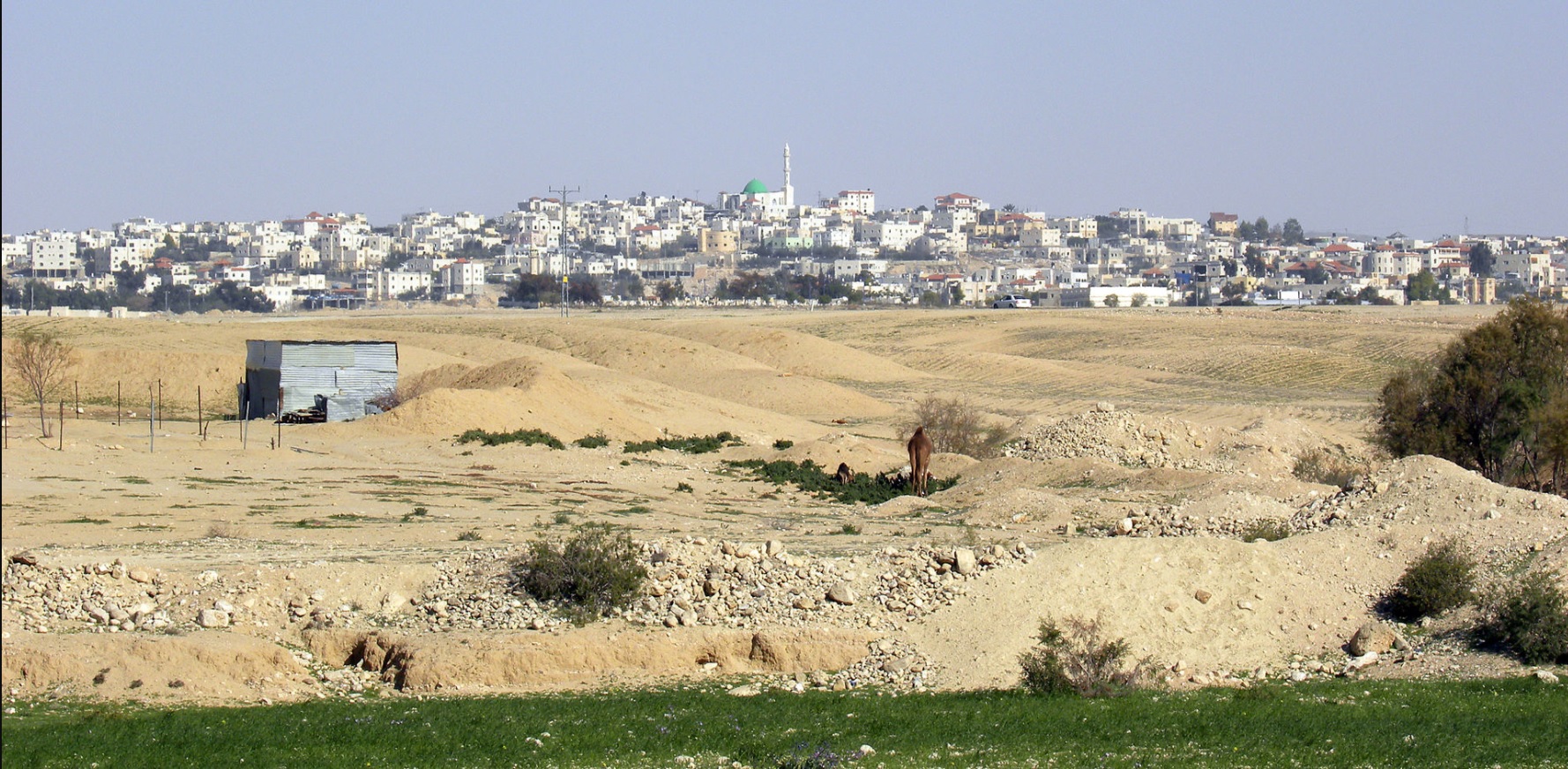
The town of Ararat an-Naqab, which Israel built for the Bedouin community.

Which is to say, Israel built “not a single” community for Palestinians, except for all the ones it did build: Rahat, Kuseife, Shaqib al-Salam, Ar’arat an-Naqab, Lakiya, Tel as-Sabi, Hura, Tirabin al-Sana, Mulada, Abu Krinat, Bir Hadaj, Qasr al-Sir, Makhul, Umm Batin. It’s Orwellian newspeak: None, but many. A lie, but with the truth appended as a throwaway-line.

This is far from the worst distortion in the document. 

Read more

New rules in a vaccinated society | NY Times

Israel’s vaccination campaign is the fastest in the world, and in the coming days it will reach a milestone, inoculating half of its population with at least one dose.

The rapid rollout is giving the rest of the world a first glimpse into the rules that may govern a vaccinated society — and they’re raising thorny questions.

This week, the government is allowing the reopening of shopping malls, gyms, sport events, hotels and other venues for the first time in months — but only for people who are fully vaccinated or have recovered from Covid-19. Under a new “Green Badge” system, customers and attendees will have to carry a certificate of vaccination with a QR code to gain entrance to many areas of public life, from restaurants and event halls, to conferences and swimming pools.

The system is fueling a heated debate about personal rights versus the greater good. But for the country’s health minister, the situation is cut and dry: “Getting vaccinated is a moral duty. It is part of our mutual responsibility,” he said. “Whoever does not get vaccinated will be left behind.”

The health ministry is now proposing legislation that would require some unvaccinated employees to be tested every 48 hours for the virus, and the health minister is promoting a bill that would identify unvaccinated people to the local authorities.

While four million people out of a population of nine million have been vaccinated, about two million citizens who are eligible have not sought a vaccine. In some cities, unvaccinated employees have been threatened with dismissal, including hotel workers and educators. A quarter or more of Israel’s teachers have not sought a first dose, and critics say they pose a danger to students under 16, who are too young to be vaccinated.

Rights groups have pushed back and have written a letter to the attorney general demanding that he issue a clear opinion that, under the law, employers may not demand vaccination status from workers. But with so many competing interests involved, resolving these issues may require legislative action from Parliament.

Dr. Maya Peled Raz, an expert in health law and ethics at the University of Haifa, defended some limits on personal liberties for the greater good. Employers cannot force employees to get vaccinated, she said, but they might be allowed to employ only vaccinated workers if not doing so could harm their business.

“It’s your choice,” she added of leisure activities. “If you are vaccinated, you can enter. As long as you aren’t, we can’t let you endanger others.”

All the Jews Joe Biden has tapped for top roles in his administration | JTA

President Joe Biden

President Joe Biden filled the months before Inauguration Day lining up a slate of Cabinet secretaries, assistants and advisors, many of them Jewish.

Biden’s choices reflect a diverse cross-section of American Jewry and possess expertise gleaned from decades of experience in government, science and medicine and law.

Here’s a rundown of the Jewish names you should know as the Biden administration begins.

Read more

Biden speaks with Netanyahu after delay raised questions | CNN

Israeli PM, Benjamin Netanyahu on the phone with US President, Joe Biden

President Joe Biden spoke Wednesday with his Israeli counterpart Benjamin Netanyahu, ending what had been a lengthy stretch without a call after Biden took office.

The period without communication had raised questions about what was behind the delay, though the White House insisted the two men had a strong relationship and that Biden was simply calling leaders in other regions before arriving at the Middle East.”

It was a good conversation,” Biden told reporters in the Oval Office shortly after the call ended, without elaborating.

In a post on Twitter, Netanyahu said he had spoken with Biden for roughly an hour in “friendly and warm” terms, affirming the US-Israel alliance and discussing issues related to Iran, regional diplomacy and the coronavirus pandemic.

Read more

A taste of home: Claudia Roden’s majestic Book of Jewish Food | Guardian

Claudia Roden

In matters of culture my late mother, Claire, took her lead from the great Times columnist Bernard Levin and described herself as a “pantry Jew”. She understood herself not through religious faith because, like me, she had none, but through the crumbly chopped liver she sometimes made. She liked to cook gefilte fish, both boiled and fried, following her grandmother’s recipe. The boiled, I hated. Once cooled, the fishy jelly had the texture of phlegm and the mixture of white fish, matzo meal and a little sugar tasted of carelessness.

But the deep-fried, an idiosyncrasy of the Anglo-Jewish community, was entirely different. I loved the outer crunch and the fluffy interior, and knew that it would be even more delicious if I were allowed to eat it hot, straight from the bubbling oil, but I was not. Claire insisted it had to be eaten cold and could not explain why, other than to say it was “better that way”.

I did not get an answer until 1997 when Claudia Roden’s Book of Jewish Food was first published in the UK. In the introduction to the fish section, Roden explains that “because it was always cooked in advance for the Sabbath, fish was usually eaten cold”. I read this to my godless mother. I pointed out that her insistence I should eat it cold was therefore a vestigial stump of childhood religious observance. She was delightfully livid.

Latkes piled on a plate
‘Any excuse for grating up potatoes and frying them must be taken’: Jay’s version of Roden’s Latkes. Photograph: Jay Rayner

It’s fitting that my first interaction with Roden’s masterpiece should not have been to consult a recipe, or check a cooking technique, but to nail a point of cultural practice. Although it sits on my cookbook shelf, and includes many recipes, The Book of Jewish Food is not really a cookbook at all. “In many ways it was the first great encyclopedia of Jewish life,” says the historian and keen cook Simon Schama. “I love it for the narrative embroidery around the recipes. That had been done before, but Claudia did it in more detail and with more sophistication than anyone else.” The chef, writer and restaurateur Yotam Ottolenghi agrees. “It’s timeless but also academic. It has a thoroughness that you don’t really see any more.”

Read more

Israeli study says Pfizer vaccine has dropped symptomatic Covid-19 cases by 94 per cent | Stuff

Health maintenance organization (HMO) Clalit, the largest healthcare provider in Israel, has reported a drop of 94 per cent of symptomatic Covid-19 infections from a group of 600,000 people who have gotten both of the necessary doses of the Pfizer vaccine, according to Reuters.

HMO Clalit covers more than half of Israel’s population, and also reported that the same 600,000 people were 92 per cent less likely to come down with a serious illness as a result of contracting the virus if they had taken the vaccine.

This study, the biggest one to date in the country, represents a continuation of promising news for the Pfizer inoculation(s), as just last month (along with Moderna) Pfizer got credit for a similar effectiveness rate of 95 per cent in a New York Times report.

If you’re wondering what the measuring stick Clalit was comparing against to come up with those percentages was, Reuters reports that the group of 600,000 was set side-by-side with a similarly-sized amount of people that had matching medical histories. Also, as you can probably guess, that second group was not given the vaccine.

Read more

A Christchurch Torah Club is underway

Torah Club is a bible study programme for people interested in understanding the bible from a historically Jewish perspective. 

It has a focus on meeting physically for study, discussion and debate.

A club has formed in Christchurch and meets weekly on Wednesday mornings.

For more details, click here.