Israeli Embassy sponsors students to attend UN Event

Ambassador Gerberg presents a certificate to Milla Batten

The New Zealand Model United Nations 2018 has just concluded and the Israel Embassy in Wellington sponsored a pair of bright and determined students at the event.

Participants at the Model UN learned about debate strategies, negotiations and ethics, and listened to many keynote speakers discuss their respective fields. The four-day event also gave participants lessons in public speaking and ethical decision-making in order to make better-prepared global citizens.

Read more

Holocaust survivor who became US Army major general has died | NZ Herald

Sidney Shachnow

Sidney Shachnow, who survived the Holocaust as a child and fought in Vietnam as a U.S. Army Green Beret before becoming a major general, has died. He was 83.

Shachnow’s wife, Arlene, said by phone Wednesday that he passed away on Sept. 27 at a hospital in Pinehurst, North Carolina. They lived in the nearby town of Southern Pines.

Shachnow was involved in some of the biggest events of the 20th Century, from enduring the horrors of Nazi-controlled Europe to leading American forces in Germany during the fall of the Berlin Wall.

He served in the U.S. Army Special Forces for more than 30 years, a career that was informed by a childhood spent avoiding death. It came full circle when he lived in a house in Berlin that was once owned by Adolf Hitler’s finance minister.

Read more

Jewish Scientist wins Nobel Prize for Physics | Jerusalem Post

Arthur Ashkin

STOCKHOLM – Scientists Arthur Ashkin, Gerard Mourou and Donna Strickland won the 2018 Nobel Prize for Physics for breakthroughs in the field of lasers used for surgery as well as scientific study, the award-giving body said on Tuesday.

Ashkin, of Jewish origin, is the 202th Jewish Nobel Prize laureate.

Frenchman Mourou, who also has US citizenship, and Canadian Strickland shared the other half.

Strickland, of the University of Waterloo, Canada, becomes only the third woman to win a Nobel prize for physics.

“The inventions being honored this year have revolutionized laser physics,” the Royal Swedish Academy of Sciences said on awarding the nine million Swedish crown ($1 million) prize.

“Advanced precision instruments are opening up unexplored areas of research and a multitude of industrial and medical applications,” it said in a statement.

Ashkin invented optical “tweezers” that could grab particles, atoms, viruses and other living cells while Mourou and Strickland separately created the shortest and most powerful laser pulses ever.

These became the standard for high-intensity lasers, for example used in millions of corrective eye surgeries per year.

Read more

Read about why his research was so important here.

Iran and Israel Don’t Want to Fight a War – Can They Avoid One? | Jerusalem Online

After Donald Trump announced that the US would unilaterally pull back from the historic 2015 Iranian nuclear deal, Iranian forces in Syria fired rockets into the Israeli-occupied Golan Heights for the first time. The Israelis retaliated by targeting Iranian forces and positions in Syria. That attack, which killed 23 people, was the biggest Israeli assault on Iranian positions in Syria since the civil war there started in 2011.

For a moment, it looked like two of the Middle East’s major political and military players to the verge of a full-scale military conflict. An Israeli-Iranian war could throw the Middle East into one of its most destructive clashes in modern history, one that could polarise the world’s powers, dragging in the US, a reliable ally of Israel, and Russia, Syria’s strongest ally and hence Iran’s strategic ally. And yet, neither has so far chosen to escalate further. Why?

Read more.

Diary of a divided land: Navigating Israel | North & South

Joanna Wane

Joanna Wane finds herself amid tumultuous times on a two-week trip to Israel and discovers…well, it’s complicated.

Tuesday, 8 May

Jerusalem “returns the love” to Donald Trump for relocating the US Embassy from Tel Aviv, with mayor Nir Bakat announcing a nearby roundabout will be named in his honour.

“Carmel Market?” I plead, stabbing at an increasingly sweat-stained piece of paper with the address of our guest house in Tel Aviv. Our bags are slumped on the footpath but I haven’t yet mastered the Hebrew hoick – it’s Ha’Carmel – and the taxi driver shakes his head, then accelerates away into the traffic.

That distinctive guttural rasp, described as a “backward snore”, seems at least one thing the Jewish and Arab worlds have in common, to the ears of an outsider, anyway. Later, I come to wonder if both sides might find such an observation offensive. It’s the differences that define and divide people here.

Don’t bother with Tel Aviv, I’ve been told by friends who did the hippy trail back in the 1970s. A lot has changed since then. The city itself was founded barely a century ago, but we’re staying in the old Yemenite district near the market, with its narrow, cobbled streets and chill hipster vibe; even the street art has serious attitude. The beach is a five-minute walk away. I love it, instantly.

Read more

ABOUT THE AUTHOR

Joanna Wane started out as a cadet on the Auckland Star in the days of manual typewriters, carbon copies, photographers’ darkrooms and hot-press printing. She still misses some of that. For the past 10 years, she’s been deputy editor at North & South, after working in newspapers and magazines in New Zealand, Australia and the UK, and dipping her toes briefly into TV documentary making before regaining her senses and finding her way into long-form journalism. She was judged Feature Writer of the Year (long-form) at the 2017 Canon Media Awards.

Marking the 75th anniversary of the rescue of the Danish Jews | CPH Post

Christian X of Denmark, riding through Copenhagen

Today marks the year of the 75th anniversary of one of the greatest triumphs in Danish history: the rescue of over 7,000 Danish Jews from Nazi persecution.

While the Nazis were taking over Europe, exterminating an estimated 6 million out of the total 8-9 million European Jews, Danish Jews, too, started being rounded up in 1943.

Despite Denmark having been under Nazi occupation since 1940, the Germans had an interest in keeping a primarily peaceful relationship with the Danes – after all they were their ‘Aryan’ neighbours.

The Danish king, Christian X, made it clear that no racial legislation or discriminatory measures would be accepted in Denmark. Its Jewish population was accordingly neither registered nor forced to wear the yellow Star of David as Jews were in other countries, and they were largely left untouched by Nazi officers.

Read more

Palestinians ask court to order US embassy out of Jerusalem | NZ Herald

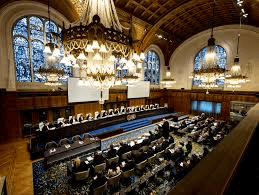
The International Court of Justice

THE HAGUE, Netherlands (AP) — The Palestinian Authority filed a case Friday with the United Nations’ highest court asking its judges to order Washington to remove the recently relocated U.S. embassy from Jerusalem.

The move announced by the Hague-based International Court of Justice comes against a backdrop of deeply strained ties between Washington and the Palestinians, in part because of the Trump Administration’s decision in December to recognize Jerusalem as Israel’s capital and to move the U.S. embassy there from Tel Aviv in May. The Palestinian Authority broke off contact with the U.S. after the Jerusalem announcement.

The court said that the Palestinians’ case asks its judges “to order the United States of America to withdraw the diplomatic mission from the Holy City of Jerusalem.”

Read more

Student uncovers early Jewish history in Auckland’s oldest cemetery | Radio New Zealand


The stories of those buried in Jewish section of Auckland’s oldest cemetery are coming to life thanks to the work of an anthropology student.

For the past two months, Richard Myburgh has been meticulously translating and documenting Hebrew enscriptions on more than 80 headstones in the Symonds Street Cemetery.

Old records containing the translations were destroyed in the 1940s but Auckland University student Mr Byburgh was working to rectify that.

“A lot of them are either damaged or very weathered over 150 years so I like being here when I’m reading and writing them because there’s something about the space that really lends itself to the weight and gravity of it,” he said.

Read more

Jews uneasy as changes in attitude creep in | NZ Herald

Yitzhak Rabin Memorial, Harris St, Wellington, New Zealand

On Wednesday a letter was published in Wellington’s Dominion Post. The writer wanted to know why there was a memorial to former Israeli prime minister Yitzhak Rabin – a man he described as leading “a bloodstained life” – on public land in the central city’s Harris St.

It may have been an honest inquiry, and there have been a few such similar letters in the five or so years since the memorial – a piece of Jerusalem stone acknowledging Rabin as a Nobel Peace Prize winner beside an olive tree – was dedicated.

A close up of the memorial

A reply yesterday pointed out the memorial was for Rabin’s efforts to break a deadlock between Israelis and Palestinians and that “soldiers sometimes make the greatest peacemakers, and to urge us to reflect on whether his violent death really means that we must descend again and forever into the abyss”.

The original letter came as no surprise to some.

Read more

Historic Māori-led apology to Israel | The Times of Israel

History was made on 29 July 2018 when the indigenous people of New Zealand organised a special ceremony to honour and welcome the Israeli ambassador, His Excellency Dr. Itzhak Gerberg. Led by Ngapuhi kaumatua (elder) Pat Ruka, and joined by many Māori from around the nation, a Powhiri (welcome ceremony) was held at Hoani Waititi Marae (meeting house) in West Auckland. The ceremony of apology, called a whakapāha, was held to express regret for New Zealand’s actions in standing against Israel at the UN and to seek forgiveness. 

In December 2016 New Zealand co-sponsored the anti-Israel UNSC Resolution 2334, along with Senegal, Malaysia and Venezuela. Many New Zealanders felt betrayed by their government’s actions and responded with letters, petitions and marches. The Israeli Ambassador was recalled for six months, and while the relationship has since been restored, the New Zealand government has never expressed regret for its stance. 

Read more