Bay of Plenty locals off to Israel for Anzac commemoration | NZ Herald

Chris Archer, Author

NZFOI:  We just bought a copy for the NZFOI library.

A group of Bay locals will travel to Israel next month to commemorate Anzac soldiers who fought in a WWI campaign little-known to New Zealanders.

Chris Archer is one of 20 Kiwis who will be commemorating the centenary of the New Zealand Mounted Rifles’ Anzac effort in Egypt and Palestine from 1914-1918.

Mr Archer and his wife Betty will join five other people from the Bay of Plenty and a further 13 people from Hamilton, Auckland and Christchurch in Israel next month.

The retired school teacher said he did not know much about the WWI battles in Egypt and Palestine but after finding a “family link” he began his research.

Read more

Corbyn Supporters Launch Purge of Pro-Israel MPs From UK Labour Party | Algemeiner

UK Labour leader Jeremy Corbyn

A long-feared purge of pro-Israel parliamentarians from the British Labour Party began in earnest on Thursday, with one party meeting even broadcast live over the internet by PressTV — the official English-language mouthpiece of the Iranian regime.

Pro-Israel MPs Joan Ryan and Gavin Shuker both lost no-confidence votes at packed constituency meetings on Thursday night.

Ryan’s defeat in the parliamentary constituency of Enfield North is particularly significant — the chair of Labour Friends of Israel since 2015, she has been a key Labour voice supporting the UK’s Jewish community, as the successive antisemitism scandals that have engulfed the party under Jeremy Corbyn’s leadership show no signs of abating.

“This was about antisemitism in the Labour party and those of us who have stood by the Jewish community and said, ‘Enough is enough,’” Ryan declared in statement following the vote. “I made no apologies last night for that and I make no apologies now.”

Read more

Sadiq Khan orders removal of ‘offensive’ posters on London bus stops that brand the state of Israel a ‘racist endeavour’ | Daily Mail

US confirms end to funding for UN Palestinian refugees | Guardian

UNRWA employees protest against a US withdrawal of funding

The Trump administration has announced it will cut all US funding for the main UN programme for Palestinian refugees, a move with potentially devastating impacts for five million people who rely on its schools, healthcare, and social services.

“The United States will no longer commit further funding to this irredeemably flawed operation,” the US State Department said in a statement, adding it was not willing to “shoulder the very disproportionate share of the burden” for the UN Relief and Works Agency (UNRWA).

The announcement had been anticipated both by senior officials at UNRWA and other Washington insiders, leading to warnings it may further destabilise the Middle East.

Read more

Anti-Semitism row ‘fight for soul of UK Labour’ | NZ Herald

UK Labour leader Jeremy Corbyn

Britain’s Labour is fighting for its soul over anti-Semitism, former Prime Minister Gordon Brown said as he warned Jeremy Corbyn that he had just days to remove the “stain” from the party.

The former Labour leader said that the party must take action “immediately” to right the “hurt” that it has caused the Jewish community.

He added that Labour must “unanimously and unequivocally” accept the international definition of anti-Semitism when the National Executive Committee votes on it tomorrow.

Read more

Israeli farmers to file war crimes complaint against Hamas | NZ Herald

A kite with an incendiary device is readied for its launch

JERUSALEM (AP) — A group of Israeli farmers is filing a war crimes complaint at the International Criminal Court in The Hague on Monday against Hamas over the torching of thousands of acres of farmland in recent months.

Read more

Bordering on disaster? | AIR

Bashar al Assad
President of Syria

In recent weeks, as the Syrian regime prepared and launched a major military operation to regain control of southwest Syria, this area has become a significant issue in international and regional diplomacy. It was, among others, the focus of discussions between Israeli Prime Minister Binyamin Netanyahu and Jordanian King Abdullah in Amman (June 18), Jordanian and Russian foreign ministers in Moscow (July 4), Netanyahu and Russian President Vladimir Putin in Moscow (July 12) and recent phone calls between Netanyahu and US President Donald Trump. Finally, it made its way into the July 16 Helsinki summit between Putin and Trump.

In the last year and a half, the Syrian regime has regained control over nearly two thirds of the country, apart from the southwest and southeast, the province of Idlib adjacent to the Turkish border, and the north-east, which is under the control of the Kurdish-dominated SDF. Having won the battle in the eastern suburbs of Damascus (Eastern Ghouta, the Yarmouk refugee camp and other areas east of Damascus), the Syrian regime decided to focus on the south, up to the borders with Jordan and Israel. This area includes the provinces of Dara’a (with the city of Dara’a, considered the “capital” of the south); Quneitra, which borders the Israeli-controlled Golan Heights; and Suweida’ further to the east, which is home to a large Druze community. In recent years, Dara’a and Quneitra have been mostly controlled by rebel groups.

The regime’s assault in the south essentially put an end to the de-escalation agreement – established in the three southwest provinces in the summer of 2017 by a Russian-US-Jordanian agreement (and first announced by presidents Trump and Putin in July 2017). The agreement excluded the jihadi groups – ISIS, which controls the Yarmouk basin (on the border triangle between Syria, Jordan and Israel) and Hay’at Tahrir a-Sha’m (HTS, formerly Jabhat al-Nusra).

The Syrian-Russian strategy and its implementation on the ground

The Syrian regime’s move towards the south was decided upon and implemented in close coordination with Russia. It incorporated and synchronised military moves, Russian diplomatic efforts vis-à-vis Israel, Jordan and the US, and Syrian regime negotiations with rebel groups and villages on the ground. The Assad regime first amassed troops in the area, sent warnings to rebels and started quiet negotiations with them about laying down their arms. Then, both Russia and Syria began airstrikes in the south followed by a Syrian ground offensive focused on the area of Dara’a – occasionally halting to give a chance to translating the military pressure to deals with the rebels. Simultaneously, Russia was conducting talks with both Jordan and Israel to make sure neither, especially Israel, opposed the Syrian offensive and would be undermining it in any way.

This strategy appears to have been by and large successful. At the time of publication, the Syrian regime has already taken over almost all of the province of Dara’a, including the city (where the uprising in Syria was sparked in 2011), the border area with Jordan and the Nassib Crossing, the main border crossing with Jordan. This constitutes a practical and symbolic victory shutting the door to potential support for the rebels from Jordan. The regime is now fighting to take over the province of Quneitra, adjacent to Israel’s border, and has already reconquered the strategic hilltop of Tel al-Harrah, some 10 kilometres from Israel’s border.

Read more

Corbyn’s comments most offensive since Enoch Powell, says ex-chief rabbi | The Guardian

R Jonathan Sacks

The former chief rabbi Jonathan Sacks has called Jeremy Corbyn an antisemite, saying the Labour leader’s comment about Zionists at a 2013 conference was the most offensive statement by a senior UK politician since Enoch Powell’s “rivers of blood” speech.

Labour dismissed the comparison with Powell as “absurd and offensive”.

In an interview with the New Statesman, Sacks, who was the UK’s chief rabbi from 1991 to 2013, said Corbyn had “given support to racists, terrorists and dealers of hate who want to kill Jews and remove Israel from the map”.

Why Won’t the Labour Party’s Anti-Semitism Scandal Go Away? | NY Times

UK Labour leader Jeremy Corbyn

LONDON — If you have over the last 30 years arranged a pro-Palestinian event of any significant size in the United Kingdom, the chances are that Jeremy Corbyn was there, either as a speaker or in the audience. Mr. Corbyn, who is now the leader of the Labour Party, is an avid and unwavering supporter of the Palestinian cause.

While not all British criticism of the Israeli government is anti-Semitic, it has a tendency to blur into it at the fringes. As a backbencher, Mr. Corbyn shared platforms with the likes of Raed Salah, a convicted anti-Semite, and he praised Hamas. Those former associations have been dogging Mr. Corbyn since he took over the Labour Party’s leadership in 2015.

This summer, Labour’s anti-Semitism problem is once again dominating the headlines in the British press and dividing the party. And as much as everyone would like it to, it doesn’t look like it will go away any time soon. To understand why, you have to understand Mr. Corbyn and what he cares about.

For the most part, Labour legislators are far more interested in domestic matters — the National Health Service, tax reform, education, basically anything — than the world outside of Britain. There are, however, a few exceptions. Mr. Corbyn is one. Foreign policy is his passion.

And for Mr. Corbyn, as for most Labour members of Parliament, “foreign” doesn’t refer to the other side of the English Channel. He is a longtime Euroskeptic whose heart has never strayed from his opposition to the European Union, but like the bulk of his more pro-European colleagues, he doesn’t regard the European Union as genuinely abroad. No, for Mr. Corbyn, foreign policy means the developing world and, especially, its left-wing movements and liberation struggles.

The charge against Mr. Corbyn is that he has spent so long in the pro-Palestine movement’s fringes as to be unable to distinguish between legitimate criticisms of Israel and hate speech toward British Jews when he hears it. Adding to the problem, some of Mr. Corbyn’s loudest supporters on social media and in local parties frequently repeat anti-Semitic tropes.

Labour members of Parliament — many of whom, seeing Mr. Corbyn as a fringe left-wing figure, opposed his leadership of the party from the beginning — are unwilling to countenance what they feel is his tolerance of anti-Semitism. For the bulk of members, the issue is a moral one: Anti-Semitic themes and anti-Semites must be called out, even if the result is a loud and destabilizing civil war that distracts from the party’s other goals.

The conflict runs in a circle. An association from Mr. Corbyn’s past, or a present-day misstep reopens it, Labour collapses into infighting, the party leadership makes a minor concession and the row is quelled. For a while.

The current iteration of the conflict has been triggered by a present-day blunder.

In order to put an end to a controversy over a remark by a Corbyn ally that Adolf Hitler had been a supporter of Zionism, the party leadership pledged to adopt the International Holocaust Remembrance Alliance’s working definition of anti-Semitism. The definition includes a number of examples of anti-Semitic behavior, some of which Mr. Corbyn fears will place excessive limits on criticism of Israel. To allay those concerns, the party leadership modified the definition, removing or changing examples relating to Israel. And they did so without consulting any of Britain’s mainstream Jewish organizations or the official body of Jewish members of the Labour Party.

The result? Another outbreak of internal warfare.

This is coming at a time when Prime Minister Theresa May’s government is deeply unpopular and rived by its own divisions. Brexit negotiations are in limbo and worrying deadlines loom.

The only person with the power to bring the fight over anti-Semitism to an end is Mr. Corbyn. He could adopt the I.H.R.A. definition in full and without amendments, and publicly condemn not only unnamed members of the Labour Party but some of his former allies for engaging in language that moves from legitimate criticism of Israel to out-and-out anti-Semitism.

But he won’t.

Contrary to the picture many of his detractors paint of him and the image some of his supporters hold, Mr. Corbyn isn’t wholly inflexible. He can compromise when he needs to and he’s done so on a number of issues, from social security cuts to tax breaks to Britain’s relationship with the European Union. But when it comes to Palestine, his passion, don’t expect any wavering.

Foreign affairs is a red line that he cannot cross. But that puts him at loggerheads with those members of his party for whom the row is not about Israel and Palestine but about reassuring Britain’s Jews of the party’s intentions. Forget agreeing to disagree: Labour’s warring tribes can’t even agree on what it is that divides them.

Stephen Bush (@stephenkb) is a special correspondent for the New Statesman and a columnist for the Independent.

Source

Top Novelist J.K. Rowling Rises in Defense of British Jews in New Criticism of Labour Leader Jeremy Corbyn | Algemeiner

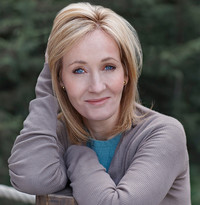
J K Rowling, Author

Celebrated novelist J. K. Rowling has won plaudits from Jewish Twitter users after her latest online battle with supporters of Jeremy Corbyn — the far-left leader of the British Labour Party hit by yet another antisemitism scandal last week after he accused “Zionists” of having no appreciation of “English irony” despite “having lived in this country all their lives.”

The British author — who created the Harry Potter series and also writes crime fiction under the pseudonym “Robert Galbraith” — has long been a critic of Corbyn, whose three years at the helm of the Labour Party have mired the party in an unprecedented crisis with the Jewish community in the UK.

In a Twitter exchange with a supporter of Corbyn on Sunday, Rowling quoted extensively from the classic 1946 essay by the French leftist philosopher, Jean-Paul Sartre, titled, “Antisemite and Jew.”

“They (antisemites) delight in acting in bad faith, since they seek not to persuade by sound argument but to intimidate and disconcert,” read one quote from Sartre selected by Rowling.

The argument started after a pro-Corbyn Twitter user, Simon Maginn, aggressively challenged a post about Corbyn from a Jewish user. “Explain your patently synthetic outrage,” Maginn demanded.

Apparently reading the exchange, Rowling leapt in, telling Maginn, “How dare you tell a Jew that their outrage is ‘patently synthetic’? How dare you demand that they lay bare their pain and fear on demand, for your personal evaluation?”

Rowling continued: “What other minority would you speak to this way?”

Source