ICC declares jurisdiction over [alleged] crimes in Palestine | The Jurist

The International Criminal Court (ICC) ruled Friday that it has jurisdiction over crimes committed in Palestine. The ICC was established in 2002 and prosecutes genocide, crimes against humanity, and war crimes committed around the world. In 2018, Palestine referred possible crimes to the ICC Prosecutor for investigation. In 2020, the Prosecutor sought a ruling of jurisdiction from the Pre-Trial Chamber.

According to Article 12 of the Rome Statute, which governs the ICC, the court may exercise jurisdiction over a crime if “the State on the territory of which the conduct in question occurred” is a party to the Statute or otherwise accepts the jurisdiction of the court. Israel argued that Palestine cannot give jurisdiction to the ICC because Palestine is not a sovereign state with jurisdiction over its own territory and nationals.

Read more

Read the full decision

Read Judge Peter Kovac’s dissenting opinion

Q&A Discussion on the decision

Understanding B’Tselem’s “Apartheid” Libel | CAMERA

Hagai El-Ad, Executive Director B’Tselem

If you’re looking for examples of spin in B’tselem’s latest anti-Israel document, in which the organization slings around the inflammatory terms “apartheid” and “Jewish supremacy,” there are plenty.  

Consider, as one small example, the report’s charge that Israel has built “hundreds of communities for Jewish citizens – yet not a single one for Palestinian citizens.” The sentence was written to sound as damning as possible, which increases its shock value, but also left the authors in the uncomfortable position of having to immediately rebut their own falsehood. “The exception,” B’tselem admits in the very next sentence, “is a handful of towns and villages built to concentrate the Bedouin population.”

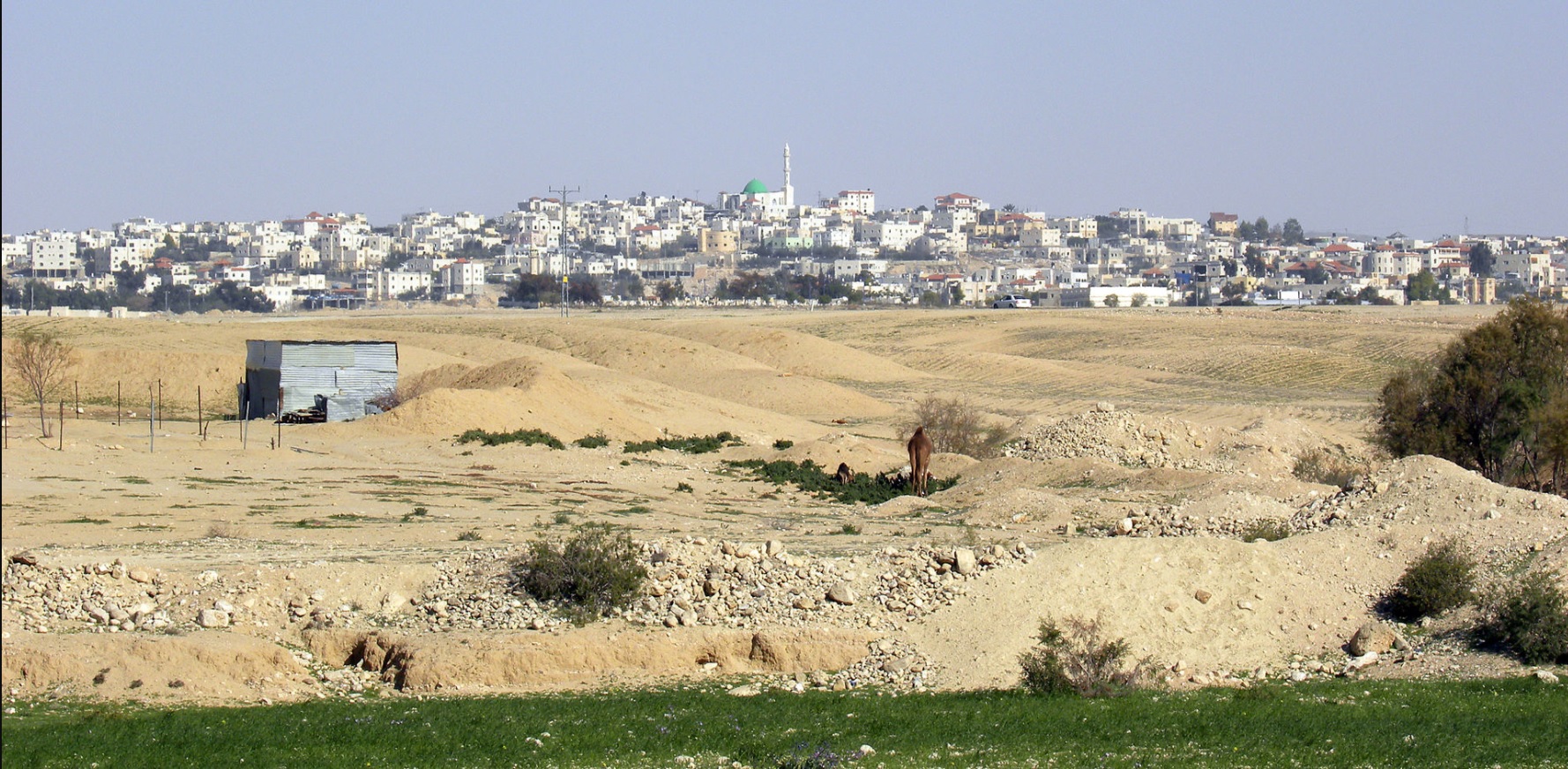
The town of Ararat an-Naqab, which Israel built for the Bedouin community.

Which is to say, Israel built “not a single” community for Palestinians, except for all the ones it did build: Rahat, Kuseife, Shaqib al-Salam, Ar’arat an-Naqab, Lakiya, Tel as-Sabi, Hura, Tirabin al-Sana, Mulada, Abu Krinat, Bir Hadaj, Qasr al-Sir, Makhul, Umm Batin. It’s Orwellian newspeak: None, but many. A lie, but with the truth appended as a throwaway-line.

This is far from the worst distortion in the document. 

Read more

A taste of home: Claudia Roden’s majestic Book of Jewish Food | Guardian

Claudia Roden

In matters of culture my late mother, Claire, took her lead from the great Times columnist Bernard Levin and described herself as a “pantry Jew”. She understood herself not through religious faith because, like me, she had none, but through the crumbly chopped liver she sometimes made. She liked to cook gefilte fish, both boiled and fried, following her grandmother’s recipe. The boiled, I hated. Once cooled, the fishy jelly had the texture of phlegm and the mixture of white fish, matzo meal and a little sugar tasted of carelessness.

But the deep-fried, an idiosyncrasy of the Anglo-Jewish community, was entirely different. I loved the outer crunch and the fluffy interior, and knew that it would be even more delicious if I were allowed to eat it hot, straight from the bubbling oil, but I was not. Claire insisted it had to be eaten cold and could not explain why, other than to say it was “better that way”.

I did not get an answer until 1997 when Claudia Roden’s Book of Jewish Food was first published in the UK. In the introduction to the fish section, Roden explains that “because it was always cooked in advance for the Sabbath, fish was usually eaten cold”. I read this to my godless mother. I pointed out that her insistence I should eat it cold was therefore a vestigial stump of childhood religious observance. She was delightfully livid.

Latkes piled on a plate
‘Any excuse for grating up potatoes and frying them must be taken’: Jay’s version of Roden’s Latkes. Photograph: Jay Rayner

It’s fitting that my first interaction with Roden’s masterpiece should not have been to consult a recipe, or check a cooking technique, but to nail a point of cultural practice. Although it sits on my cookbook shelf, and includes many recipes, The Book of Jewish Food is not really a cookbook at all. “In many ways it was the first great encyclopedia of Jewish life,” says the historian and keen cook Simon Schama. “I love it for the narrative embroidery around the recipes. That had been done before, but Claudia did it in more detail and with more sophistication than anyone else.” The chef, writer and restaurateur Yotam Ottolenghi agrees. “It’s timeless but also academic. It has a thoroughness that you don’t really see any more.”

Read more

Our Truth, Tā Mātou Pono: The 1977 hate speech attack on Jews in Auckland’s Remuera | Stuff

Dr Paul Spoonley

Leaflets likening Jews to the devil resulted in New Zealand’s only prosecution for hate speech – but it’s a story most are unaware of. Torika Tokalau reports.

Expensive homes and quiet tree-lined streets – Auckland’s Remuera is a picture-perfect slice of suburbia, but it was also the location of New Zealand’s first and only prosecuted incident of hate speech.

In the late 1970s, members of the Jewish community were targeted in a leaflet drop, condemning their faith and likening them to the devil.

Sociologist and professor, Dr Paul Spoonley, who researches racism in New Zealand, believes it was the moment Kiwis first realised neo-Nazi groups existed in this country.

Holocaust survivor Bob Narev, 84, remembers it quite clearly.

In 1977, 30 years after he moved to New Zealand from Switzerland, Narev was living on the fringes of Remuera with his wife, Freida, also a Holocaust survivor.

Bob Narev, a German-born Holocaust survivor, was living on the edge of Remuera in 1977 when the pamphlets were distributed.

The National Socialist White People’s Party of New Zealand, founded by Durward Colin King-Ansell, printed and distributed 9000 pamphlets to Remuera postboxes, some time in the first four months of the year.

Read more

Jewish Food for Thought: Conflict resolution

Recommended by one of our supporters. Thought provoking…

A Christchurch Torah Club is underway

Torah Club is a bible study programme for people interested in understanding the bible from a historically Jewish perspective. 

It has a focus on meeting physically for study, discussion and debate.

A club has formed in Christchurch and meets weekly on Wednesday mornings.

For more details, click here.

Ran Yaakoby introduction video

A few of our members are not members of Facebook and so haven’t been able to see Ambassador Yaakoby’s well-made video introduction, so here it is!

Order your Matzos bread in time for Pesach (Passover)!

Aviv Matzos Bread

Hi Folks

Every year, we receive requests for Matzos bread for Passover.  Passover (Pesach) 2021 is coming up on the evening of March 27, and this year we have Matzos bread available!

It’s Aviv’s unleavened bread and made with only flour and water in 450g boxes. Matzos bread is traditionally eaten over Passover. Use Matzos as a substitute for bread or as a delicious cracker. No added sugars, salt, fats, colouring or preservatives.

There are only 30 boxes so be in quick and 21 (updated 7/2/21) boxes have sold already.

Price

$11 each + P&P

P&P via NZ Post and within NZ only.

1-2 boxes:  Untracked $7, Tracked $8. Let us know which you prefer.
3-4 boxes:  Untracked 9.50, Tracked $10.50.

If you require 5 boxes or more, or you wish to pick up in Christchurch, call us +64 (27) 433 9745.

How to make an order

Send us an email with your name, delivery address and quantity required to contact@nzfoi.org

Or if you are in Christchurch, you can pick up at our next NZFOI meeting (see the events calendar)

Payment instructions

Internet banking payments can be made to:

Bank:  Bank of New Zealand
Account Name:  NZ Friends of Israel Association Inc
Account Number:  02 0820 0569411 000
Code:  Matzos
Reference:  Your initials and surname

Cheques may be made out to NZ Friends of Israel Association Inc and posted to:

NZ Friends of Israel Association Inc
Box 37 363
Christchurch 8245

We will despatch within a day of payment clearing and receipt of a delivery address.

Shalom

NZ Friends of Israel Assoc Inc
Box 37 363
Halswell
Christchurch
New Zealand 8245

+64 (27) 433 9745
contact@nzfoi.org
www.nzfoi.org

Nathan Lewin argues key evidence omitted by Kosher Slaughter advocates | JNS

Nathan Lewin

NZFOI: Nathan Lewin, a distinguished US Attorney, says that the Kosher Slaughter advocates neglected to include key evidence that would have strengthened their case, after an European Court ruled against them.

Neither this history [i.e. the evidence presented in the US] nor the scientifically supported proposition that shechita’s “simultaneous and instantaneous severance of the carotid arteries with a sharp instrument” is as effective as stunning was presented to the European court.

It is clear from the reasoning articulated in the opinion that no one gave the European court the evidence that was heard by the American congressional committees. The European court assumed that animal welfare, which it recognized as a permissible legislative goal, required stunning before slaughter.

It held that stunning only affected “one aspect of the specific ritual act of slaughter and that act of slaughter is not, by contrast, prohibited as such.” This limited restriction, it said, “is appropriate for achieving the objective of promoting animal welfare.”

Read more

Full Text: Director of Prayer for Israel NZ farewell message to the Ambassador of Israel

Teresa and Michael Thomas, Directors of Prayer for Israel, New Zealand

On November 12, NZ Friends of Israel held a farewell reception for H.E. Excellency Ambassador Yitzhak Gerberg.  One of the speakers was Michael Thomas , Director of Prayer of Israel New Zealand.  Here is the full text of his address:  

Greetings your Excellency,

My name is Michael Thomas, and my wife Teresa are honoured to be here tonight with you. Although we have only lived in New Zealand for three years, approximately 18 months ago, we were invited to become the directors of a Christian ministry called Prayer for Israel New Zealand.

This ministry was formed in 1981 by a wonderful Kiwi man, named Murray Dixon. Under his leadership, this ministry spread rapidly all over New Zealand… With literally dozens of groups springing up across the entire country of New Zealand. Today, no matter where my wife and I travel in New Zealand we are greeted by groups of individuals gathered together to regularly and fervently pray to the God of Israel for the people of Israel. You’ll find meetings throughout New Zealand that meet weekly, fortnightly or monthly… Typically for anywhere from 1/2 to 2 1/2 hours.

These groups are quite diverse from place to place and home to home. One tiny group outside of Palmerston North asked us to come and meet them. It’s a small group and they meet every Wednesday morning at 10:30 at the kitchen table. An Indian woman, two Kiwis, several Pacific Islanders, a Jamaican, a Filipino… And while we were there, they even had two Yankees.
Three weeks after meeting with them, we met a group of 60+ people in the town hall of Opitiki. Among these only four of us were “Pakehas” (non-Maori), the rest, of course, were Maori. And among them, a surprisingly large number were of Jewish descent. We gathered together for two hours to pray for Israel to the God of Israel. From every tongue tribe and nation, it seems that prayer for Israel is being poured out.

During lockdown, my wife and I introduced Zoom to nearly 250 people that ranged in age… People in their 40s, 50s, 60s, 70s, 80s & 90s… Most of these folks were not very technologically literate… But we worked with them, and they worked with us. The reason, was so that even during lockdown they wanted to meet together to pray for Israel. While most of these meetings were typically held fortnightly or monthly… Through the lockdown people were meeting weekly and often attended more than one meeting.
As we read in Psalm 122:6 “Shalu Shalom Yeerushalaim, “pray for the peace of Jerusalem.”

One of our joys in meeting and meeting some of these groups is encouraging them to close every meeting with the reading of the priestly blessing found in the sixth chapter of Bamidbar (or the book of Numbers).
So tonight, we would like to bless you as you and your family return to the Land.

Numbers 6:22-28

The Lord spoke to Moses, saying, “speak to Aaron and his sons, saying, thus you shall bless the people of Israel: you shall say to them,

Evareccha ADONAI vayish marecha
The Lord bless you and keep you;

Yaer Adonai panavalecha v’hunecha
the Lord make his face to shine upon you and be gracious to you;

Isa adonai panavelecha, v’asemlecha shalom
the Lord lift up his countenance upon you and give you peace

[and we never forget this last verse…]
“So shall they put my name upon the people of Israel, and I will bless them.”

Go well, remember that there are always friends in New Zealand, and they are praying for you.

Thank you.